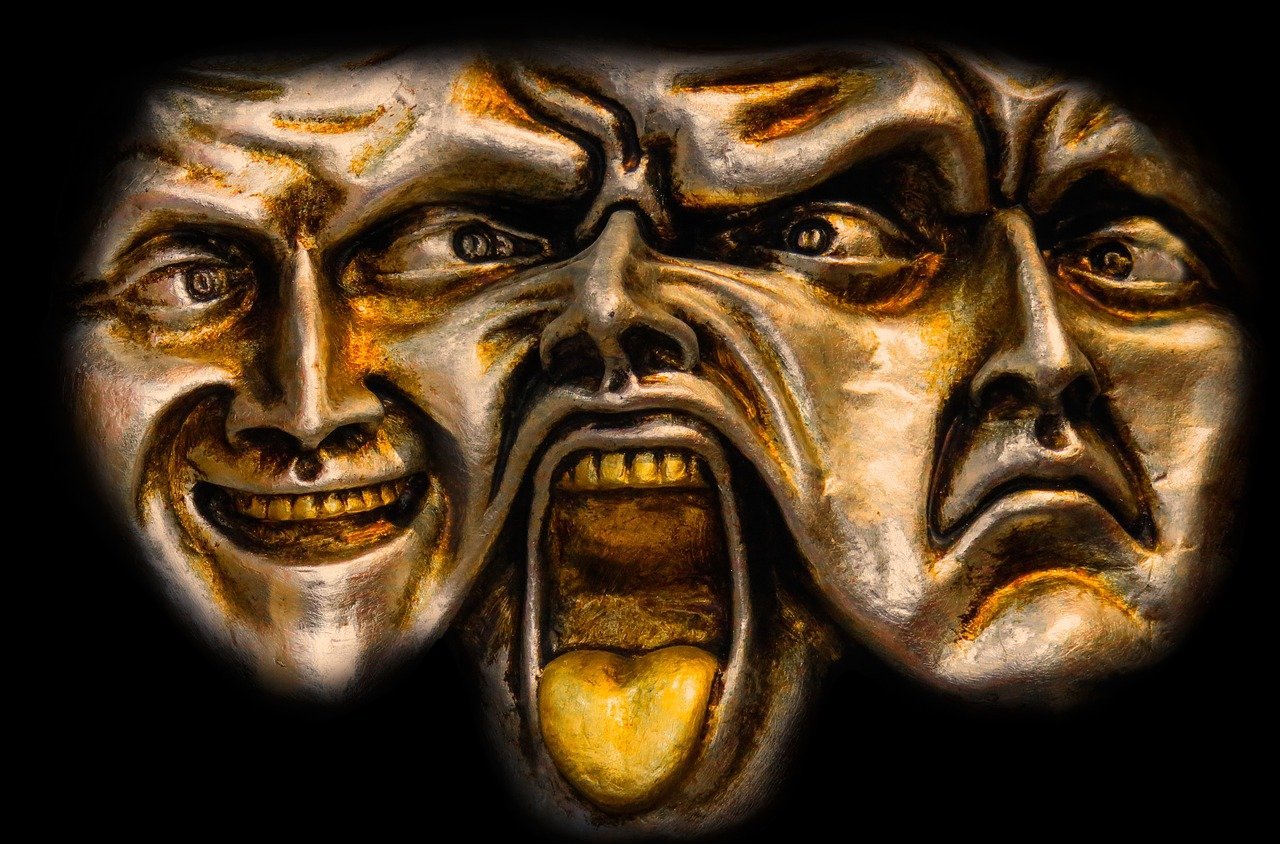
If you are also intrigued by this question, how do you write a character arc?
Welcome to the club.
While writing, reading, or watching a character, whether it is a person, a Pixar character, or even someone we know in real life, I have started noticing a pattern.
A character does not usually change in one clean jump.
They move through phases.
I like to call this the pattern of triads, or simply the pattern of three.
So, in this blog, we are going to discuss three things.
Hahaha. Obviously three.
- What is a character arc?
- What is the pattern of triads?
- How can writers use this to create better character arcs?
What is a character arc?
A character arc is the internal journey a character goes through during a story.
Their beliefs, fears, values, or self-image change because of what they experience.
They begin with one idea about the world. That idea may be incomplete, innocent, flawed, or even completely wrong. Then life tests that belief. It breaks it, challenges it, stretches it, and sometimes reshapes it.
That is the arc.
It is not just about defeating the villain.
It is not just about winning the prize.
It is not just about getting the girl, the boy, the kingdom, the job, or the dream.
Those are external victories.
A character arc is about internal movement.
Fear turning into courage.
Selfishness turning into empathy.
Naivety turning into discernment.
Control turning into trust.
Obsession turning into acceptance.
But when you zoom in closer, many satisfying character arcs do not move directly from flaw to wisdom.
They usually move through three states before the final change feels real.
That is where the pattern of triads comes in.
Why change often happens in threes
A character usually faces a conflict.
To solve it, they first try with the worldview they already have.
That first attempt is often naive. Maybe honest, maybe hopeful, maybe brave, but still incomplete.
Then something goes wrong.
They fail. Or they get hurt. Or they get only a partial success. So, naturally, they swing to the opposite side.
If they trusted too much, now they trust no one.
If they loved too blindly, now they become cold.
If they were reckless, now they become rigid.
If they were selfish, now they overcorrect and try to prove they are good.
But that second version is also not the final answer.
It is just the opposite extreme.
Only after trying both sides does the character begin to find a balance. They do not return to who they were at the beginning, and they do not remain trapped in their reaction either.
They become something more integrated.
That is why so many stories feel satisfying when the hero succeeds on the third attempt. Even in romance, like Bachna Ae Haseeno, the third attempt at love often feels like the one where the character is finally ready.
Not perfect.
Ready.
There is a difference.
What is the pattern of triads?
Through this lens, I started paying closer attention to stories. Not only to what happens in the plot, but also to what happens inside the character.
Again and again, I noticed this cycle:
- The unaware self
- The reactive self
- The integrated self
They do not jump from flawed to wise.
They swing.
They try something, get hurt, and then swear “never again.” That “never again” becomes their second version. They block what they once needed. They avoid what they once wanted. They become the opposite of who they were.
And later, usually after more mistakes, they find a quieter truth somewhere in the middle.
Between wanting and letting go.
Between obsession and indifference.
Between softness and self-respect.
Between building and breaking.
This does not just happen in fiction.
It happens in people.
Which is probably why it works so well in stories.
Stage One: The Unaware Self
At the beginning of many stories, the character is operating with limited information.
They may be idealistic, reckless, overly trusting, emotionally closed, people-pleasing, or convinced that they already understand how life works.
They are not stupid.
They are simply untested.
This is the version of a person who has not yet paid the cost of their worldview.
In relationships, this might look like giving too much, bending too easily, and believing love alone can fix everything.
In adventure stories, this might be the hero who thinks courage means charging forward without fear.
In stories about grief, like A Man Called Otto, it might be someone who believes closing himself off is the only way to survive pain.
There is usually something admirable in this stage.
And something dangerously incomplete.
That combination is important.
If the character is only foolish, we judge them.
If the character is only good, we do not believe them.
But if they are admirable and incomplete, we want to watch them grow.
Stage Two: The Reactive Self
Then something breaks.
A betrayal.
A failure.
A loss.
A humiliation.
This is where many characters swing hard in the opposite direction.
The trusting person becomes suspicious.
The gentle one becomes sharp.
The reckless one becomes rigid.
The selfish one becomes desperate to prove themselves.
This is not wisdom yet.
It is armour.
The character is not solving the original flaw. They are just replacing it with a new extreme.
In the first stage, they stood at one end of the spectrum. In this stage, they run to the opposite end and call it growth.
But it is not growth.
Not yet.
This is often the ugliest version of the protagonist, and that is important.
Stories feel fake when characters skip this part, because in real life most of us do not become balanced immediately after getting hurt.
We become defensive first.
We overcorrect.
We say, “I will never be that person again,” and then we become another incomplete version of ourselves.
Stage Three: The Integrated Self
Only later does the third version appear.
Usually after more mistakes.
Many, many times later.
This character does not return to who they were in the beginning. But they also do not stay trapped in the armour of the second stage.
They become informed.
They understand both sides now. They know the innocence of the first version and the protection of the second version. But now, instead of being controlled by either extreme, they learn to choose.
In relationships, this might look like loving again, but with boundaries.
In adventure stories, courage becomes paired with caution.
In moral stories, conviction becomes tempered by humility.
In grief stories, the character may not “move on” completely, but they learn to live with the memory without letting it destroy them.
That is what makes an ending feel deserved.
Not because the character becomes perfect.
But because the character becomes more whole.
How writers can use this
Readers and cinephiles can use this pattern to understand characters better.
But if you are a writer, this becomes even more useful.
To write a character arc that feels authentic, ask:
- What is my character naive about in the beginning?
- What event forces them to abandon that belief?
- What opposite extreme do they swing toward?
- What does that second version protect them from?
- What do they finally accept to find balance?
- What part of the first version is still worth saving?
That last question is important.
Because growth does not always mean killing the old self completely.
Sometimes growth means rescuing the honest part of the old self and combining it with the wisdom of the new self.
That is the integrated self.
Also, do not rush a character from stage one to stage three.
Let them fail.
Let them overcorrect.
Let them become a little unlikeable.
Let them think they are healed when they are actually just protected.
That is where the real story lives.
Of course, not every story completes the whole pattern. Some stories only show one stage. Some leave the character at a positive turning point, not a full resolution. Eternal Sunshine of the Spotless Mind feels like that to me. It does not give us a neat answer, but it gives us movement.
And sometimes movement is enough.
Closing thought
I do not think growth is linear.
I think it zigzags.
We try one thing.
We get hurt.
We try the opposite.
We get hurt again.
Then, slowly, we learn what was true in both versions.
That zigzag is what I am calling the pattern of triads.
Maybe that is why character arcs feel so satisfying when done well. They do not just show us how fictional people change.
They remind us how we change.
P.S. As you know, I am working on Project SWAS, and this thought is connected to that story. I think this pattern may help me understand not just what my characters do, but who they become.